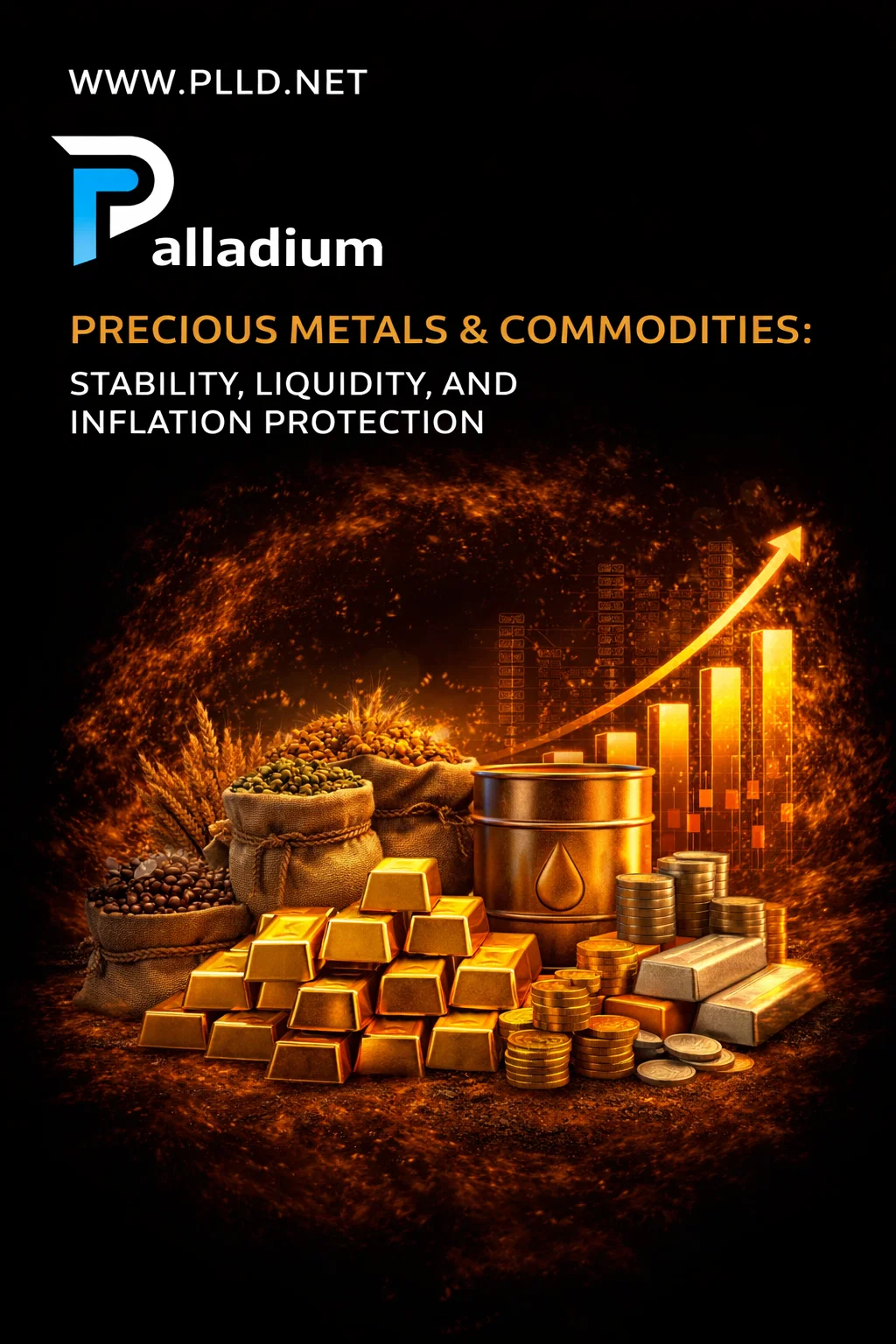
Understanding Commodities as an Asset Class
Commodities are raw materials used in the production of goods and services. They are generally divided into two main categories:
- Precious Metals – Such as gold, silver, platinum, and palladium
- Energy and Industrial Commodities – Including oil, natural gas, copper, and agricultural products
Because commodities are essential to everyday economic activity, their value often behaves differently from stocks and bonds.
Gold: The Traditional Store of Value
Gold has been used as a store of wealth for centuries. It is widely viewed as a hedge against inflation, currency devaluation, and financial instability.
Key characteristics of gold include:
- Limited supply and global demand
- High liquidity across international markets
- Strong performance during economic stress
Gold often plays a stabilizing role when other asset classes experience volatility.
Silver: Dual Role as Metal and Commodity
Silver shares many characteristics with gold but also has significant industrial applications, including electronics, renewable energy, and medical technology.
This dual role means silver can benefit from both investment demand and economic growth, though it tends to be more volatile than gold.
Energy and Industrial Commodities
Oil, natural gas, and industrial metals like copper are closely tied to global economic activity. Their prices are influenced by supply and demand, geopolitical factors, and technological change.
These commodities can offer strong returns during periods of expansion but may fluctuate sharply during economic slowdowns.
Inflation Hedging and Portfolio Diversification
One of the main reasons investors allocate capital to commodities is inflation protection. As the cost of goods rises, commodity prices often increase as well, helping preserve purchasing power.
Commodities also tend to have a low correlation with traditional financial assets, making them effective diversification tools within a broader portfolio.
Liquidity and Accessibility
Modern investors can access commodities through various channels:
- Physical ownership (gold and silver bullion)
- Exchange-traded funds (ETFs)
- Futures and derivatives
- Commodity-focused investment funds
These options allow investors to balance liquidity, risk, and exposure based on their individual strategy.
The Role of Commodities in a Balanced Portfolio
Precious metals and commodities provide grounding and resilience in uncertain markets. When combined with assets like stocks, real estate, and cryptocurrencies, they help create a more stable and adaptable investment portfolio.
In the final article of this series, we will bring all asset classes together and explore how to craft a balanced investment portfolio that aligns with long-term goals and risk tolerance.
Disclaimer:
This article is not financial advice. Always conduct your own research before making financial decisions.