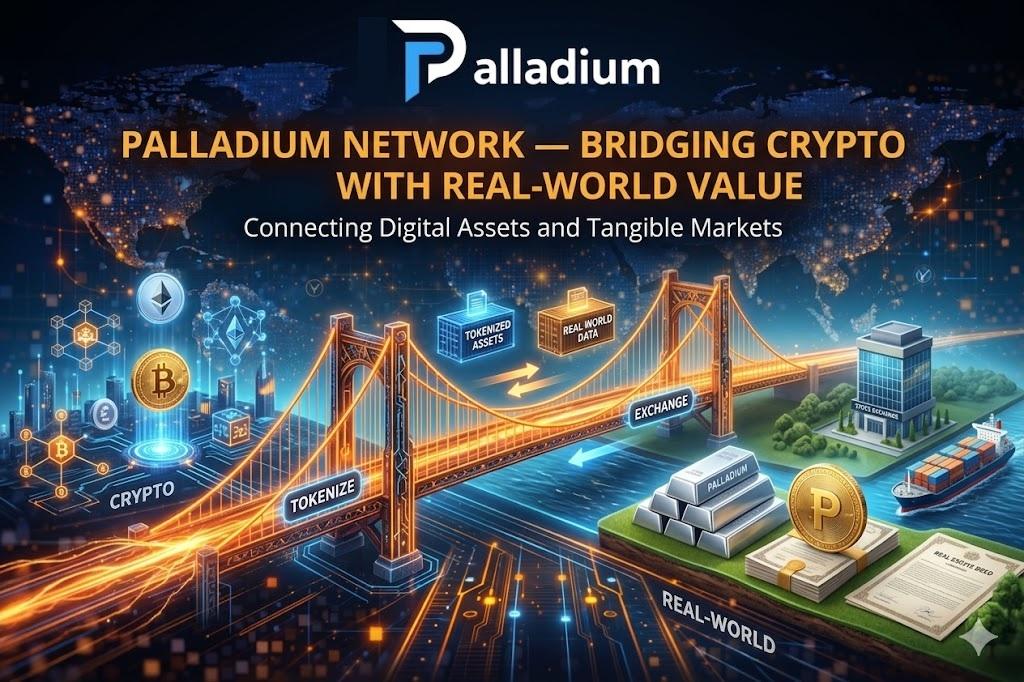
A Hybrid Model: Blockchain + Real-World Assets
One of the defining concepts behind Palladium Network is the integration of blockchain technology with real-world assets (RWAs), particularly real estate.
The project’s ecosystem revolves around the idea that digital finance becomes stronger when connected to tangible assets capable of generating long-term utility and value. Through tokenization, Palladium seeks to make real estate ownership more accessible, transparent, and globally available.
This places PLLD within the rapidly growing RWA sector — a segment of crypto focused on bringing traditional assets such as property, commodities, and financial instruments onto blockchain infrastructure.
Real Estate NFTs and Fractional Ownership
A major component of the ecosystem is the development of Real Estate NFTs.
According to the platform, these NFTs represent fractionalized ownership of tokenized properties, allowing users to gain exposure to real estate through blockchain-based assets rather than traditional ownership structures.
The system is designed around four core stages:
- Property acquisition
- Blockchain tokenization
- Fractional ownership via NFTs
- Distribution of potential income and appreciation exposure
This model lowers entry barriers typically associated with property investment and introduces a more liquid and borderless approach to real estate participation.
Palladium has also stated that users staking at least 5,000 PLLD may receive NFT allocations tied to future property collections launched within the ecosystem.
More Than a Token
Palladium Network presents itself as a complete ecosystem rather than a standalone cryptocurrency project.
Key ecosystem components include:
- Automated arbitrage trading systems
- PLLD staking infrastructure
- Cross-chain swap functionality
- DAO treasury plans
- Real estate-backed NFT integration
The platform’s automated trading system is described as operating across multiple exchanges to identify arbitrage opportunities and generate trading profits. A portion of ecosystem activity is intended to support token buybacks and ecosystem growth mechanisms.
This interconnected structure is designed to create multiple layers of utility around the PLLD token rather than relying exclusively on speculative demand.
Token Utility Within the Ecosystem
The PLLD token functions as the ecosystem’s core utility asset.
According to Palladium’s published materials, PLLD may be used for:
- Staking participation
- Accessing ecosystem features
- Swap platform activity
- Participation in NFT and RWA systems
- Governance-related functionality planned through future DAO mechanisms
The platform also outlines token buyback and burn mechanisms intended to reinforce scarcity and ecosystem sustainability over time.
Positioning Within the Future of Web3
The broader crypto market is increasingly shifting toward projects with functional ecosystems and real-world integrations.
Palladium Network positions itself within several emerging sectors simultaneously:
- Real-world asset tokenization (RWA)
- Decentralized finance (DeFi)
- NFT utility
- Automated trading infrastructure
- Cross-chain interoperability
Community discussions around the project frequently highlight this “multi-utility” approach as one of its most ambitious aspects. Some observers view the ecosystem as a potential long-term infrastructure play, while others point out that successful execution across multiple verticals remains the key challenge.
Why Projects Like PLLD Matter
The next phase of blockchain adoption may depend less on speculation and more on practical utility.
Projects exploring tokenized ownership, real-world yield generation, and interoperable financial ecosystems represent a growing evolution within Web3 infrastructure. Palladium Network reflects this broader trend by attempting to merge traditional asset classes with decentralized technology.
As tokenization expands globally, ecosystems that successfully bridge digital finance with tangible assets could play an increasingly important role in the future of blockchain adoption.
Conclusion
Palladium Network is building a Web3 ecosystem centered around utility, real-world assets, and interconnected blockchain services.
By combining:
- Automated trading systems
- Staking infrastructure
- Cross-chain swaps
- Real estate-backed NFTs
- Utility-driven tokenomics
the project aims to create a hybrid financial ecosystem where blockchain technology connects directly with tangible value and long-term participation.
Whether the broader market fully embraces this model remains to be seen, but the direction is clear: the future of crypto is increasingly moving toward utility, integration, and real-world relevance.
Disclaimer: The information provided in this article is for informational and educational purposes only and should not be considered financial, investment, or trading advice. Cryptocurrency markets are highly volatile and involve significant risk. Readers are encouraged to conduct their own research, verify all facts, and consult with a licensed financial advisor before making any investment or trading decisions.