1. Ancient Beginnings: Trust, Trade, and Tangible Value
Early investing was simple: people stored value in whatever was scarce and widely accepted.
- Agriculture was one of the earliest “investments,” as land and livestock produced recurring returns.
- Precious metals, especially gold and silver, emerged as universal stores of value because they were durable, scarce, and easily tradable.
- Early joint ventures, such as caravan or ship expeditions, allowed individuals to pool resources and share profits.
Although primitive compared to modern systems, the fundamentals were already there: risk, reward, and trust.
2. The Rise of Financial Institutions and Paper Wealth
As civilizations grew, so did financial sophistication.
- Banks appeared in ancient Mesopotamia and later in Renaissance Italy, allowing savings, lending, and early forms of interest.
- Bills of exchange emerged as one of the first forms of “paper money,” making trade far easier.
- The Amsterdam Stock Exchange (1602) became the first official marketplace for buying and selling shares in a company, introducing equity investing.
This period marked a crucial shift: wealth could now be represented on paper, not only in physical goods.
3. Industrial Revolution: Investing Goes Mainstream
The 18th and 19th centuries brought rapid technological and demographic changes.
- Railroads, steel, manufacturing, and energy companies created a boom in capital markets.
- Ordinary citizens could invest in growing businesses through stocks and bonds.
- Governments began regulating markets, protecting investors and increasing trust.
For the first time in history, investing was not only for kings, merchants, and elites — it became accessible to the general public.
4. The 20th Century: Real Estate, Globalization, and Financial Products
The modern era diversified investment like never before.
Real estate as a wealth-builder
Post-WWII stability and urbanization made property one of the most reliable long-term wealth generators. Owning land or housing became a backbone of middle-class investment.
Globalization
Investors could now buy stocks, bonds, and commodities from anywhere in the world. International markets linked economies like never before.
New financial instruments
Mutual funds, ETFs, derivatives, and retirement accounts (like 401(k)s or pension funds) changed how people saved, invested, and planned their futures.
Investing became automated, diversified, and far more strategic.
5. Digital Era & The Rise of Crypto: The Internet Transforms Everything
In the 21st century, investing entered a new frontier — digital assets and decentralized finance.
- Online trading platforms made investing global, instant, and low-cost.
- Cryptocurrencies introduced a new type of asset: decentralized, borderless, and programmable.
- Blockchain enabled tokenization — the ability to convert real-world assets into digital tokens.
- Fractional ownership made expensive investments (e.g., real estate or fine art) accessible to everyday people.
- AI-driven investing provides automated portfolio management, risk analysis, and market insights.
Investing is no longer limited by geography, banking hours, or traditional gatekeepers.
6. Looking Ahead: The Future of Investment
We are now entering an era where investing may become fully integrated with digital ecosystems:
- Tokenized real-world assets (RWA)
- Smart-contract-based investing
- Blockchain-driven transparency and proof-of-ownership
- AI-powered financial decision-making
- Decentralized global markets with 24/7 liquidity
The core remains the same — turning resources into future value — but the tools are evolving faster than ever.
Conclusion
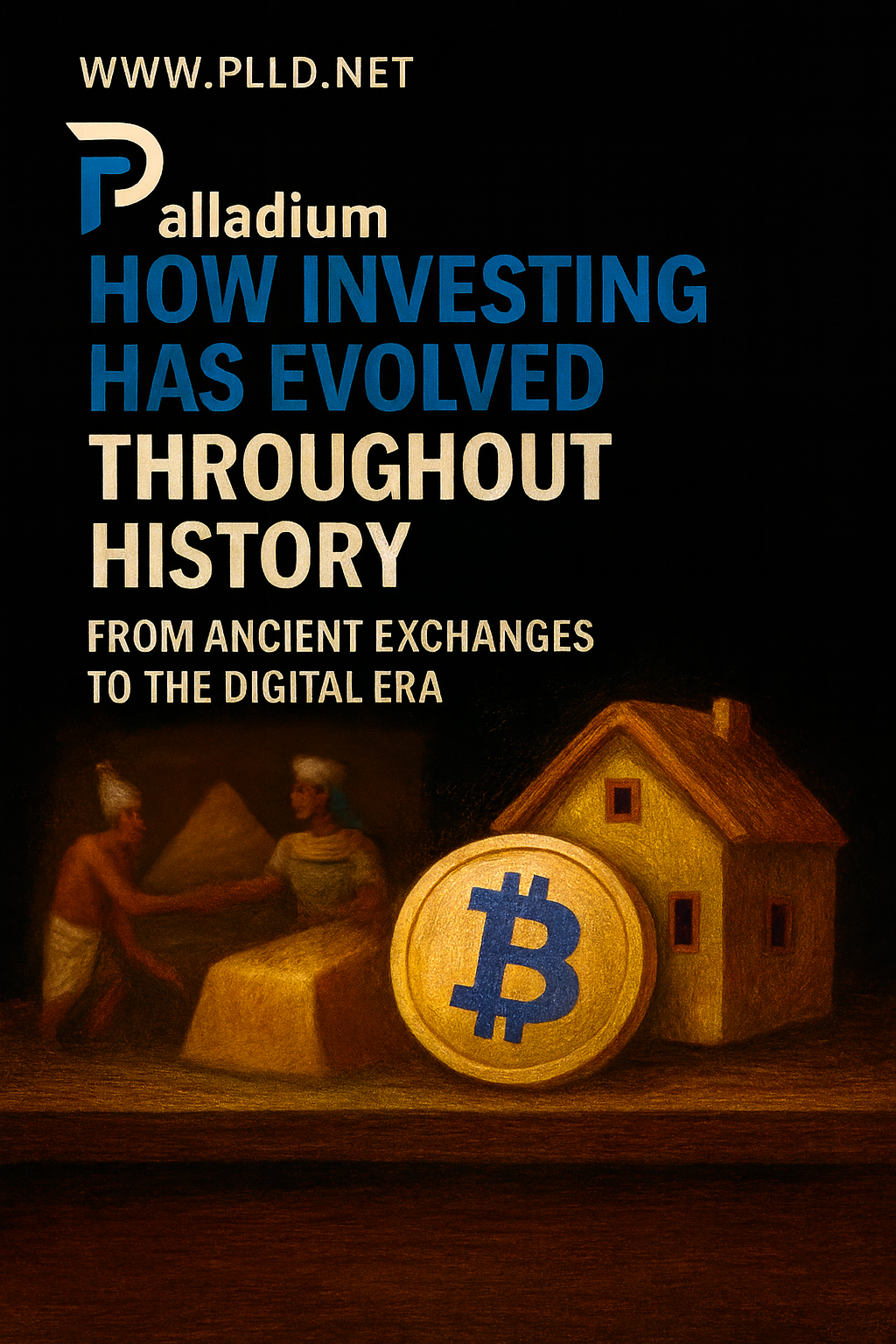
From gold coins to global stock markets to digital tokens, the history of investing is a story of innovation, trust, and human ambition. Each generation builds on the tools of the last, seeking new ways to grow wealth and access opportunities.
Today, investors live in the most dynamic era ever — where ancient principles meet futuristic technology. And the evolution is far from over.