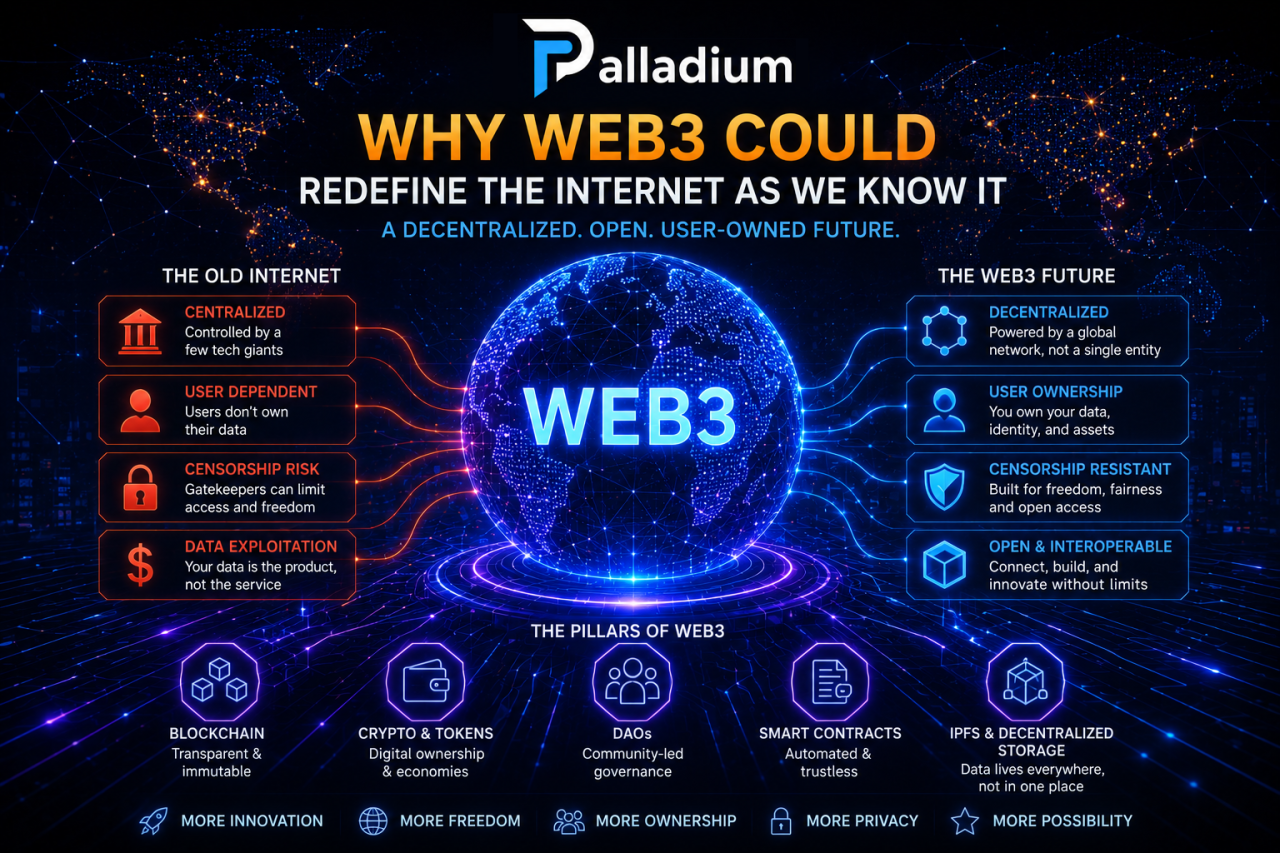
Understanding the Evolution of the Internet
To understand Web3, it helps to look at how the internet has evolved:
Web1: Read-Only Internet
The early internet focused mainly on consuming information through static websites.
Web2: Interactive Internet
Social media, mobile apps, and user-generated content transformed the web into a highly interactive environment.
However, Web2 also led to increasing centralization, where major platforms gained enormous control over:
- User data
- Online identities
- Advertising systems
- Content distribution
Web3: Ownership and Decentralization
Web3 introduces a different model—one where users regain ownership of their digital assets and identities through blockchain technology.
What Makes Web3 Different?
Web3 is built around several key principles:
- Decentralization – Systems operate without relying on centralized platforms
- Digital Ownership – Users own assets, identities, and data
- Transparency – Blockchain activity is publicly verifiable
- Permissionless Access – Anyone can participate without gatekeepers
This creates a more open and community-driven internet.
The Role of Blockchain
Blockchain acts as the foundation of Web3 by enabling secure and transparent digital ownership.
Through blockchain networks, users can:
- Hold cryptocurrencies
- Own NFTs and digital assets
- Interact with decentralized applications (dApps)
- Participate in decentralized finance (DeFi)
Instead of accounts being controlled by companies, ownership is tied directly to users through digital wallets.
Digital Ownership Is Changing Everything
One of Web3’s biggest innovations is true digital ownership.
In Web2 platforms:
- Users create content
- Platforms own the infrastructure and monetize the data
In Web3:
- Users can directly own their assets
- Creators can monetize without intermediaries
- Communities can govern ecosystems collectively
This shift could fundamentally change online business models.
NFTs and Online Identity
NFTs are becoming an important part of Web3 ecosystems.
Beyond digital art, NFTs can represent:
- Membership access
- Gaming assets
- Event tickets
- Digital identities
- Ownership rights
They create new ways for users to engage online while maintaining ownership of their digital presence.
Challenges Facing Web3
Despite its potential, Web3 still faces obstacles:
- Complex onboarding for new users
- Scalability issues on some networks
- Regulatory uncertainty
- Security concerns around smart contracts and wallets
Improving user experience will be critical for mainstream adoption.
The Push Toward Mainstream Adoption
Major companies and institutions are increasingly exploring Web3 technologies.
This includes:
- Blockchain payment systems
- Tokenized digital economies
- Decentralized identity systems
- NFT integrations
As infrastructure improves, Web3 could gradually become integrated into everyday digital experiences.
The Future of the Internet
The transition to Web3 will not happen overnight, but momentum is building rapidly.
Future internet platforms may prioritize:
- User ownership
- Data privacy
- Decentralized governance
- Transparent ecosystems
This could lead to a digital world where users have more control over their online lives than ever before.
Conclusion
Web3 represents more than just a technological upgrade—it represents a shift in how the internet is structured and who controls it.
By combining blockchain technology with decentralized systems, Web3 aims to create a more open, transparent, and user-driven digital economy.
As adoption continues to grow, Web3 could become one of the most important technological transformations of the next generation.
Disclaimer: The information provided in this article is for informational and educational purposes only and should not be considered financial, investment, or trading advice. Cryptocurrency markets are highly volatile and involve significant risk. Readers are encouraged to conduct their own research, verify all facts, and consult with a licensed financial advisor before making any investment or trading decisions.