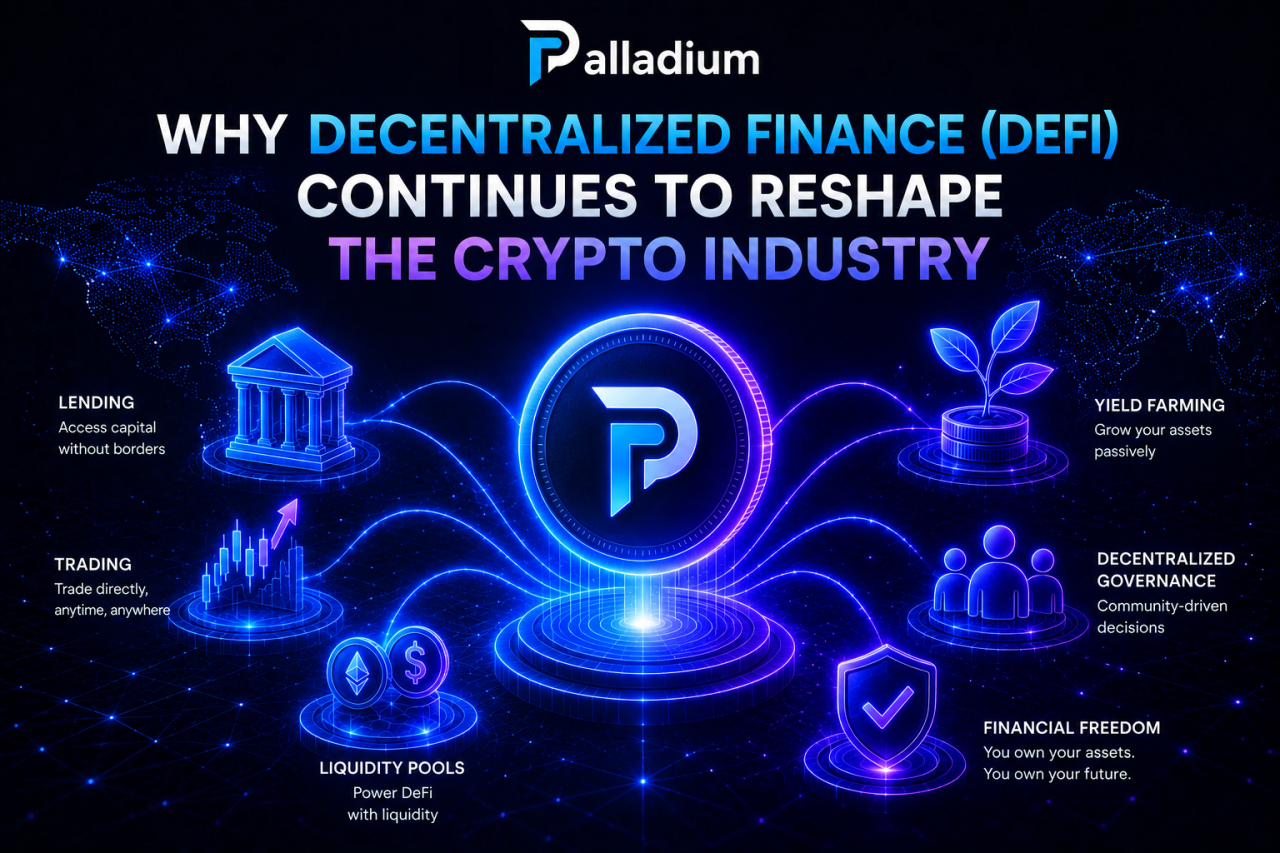
What Is DeFi?
Decentralized Finance refers to blockchain-based financial systems that operate without traditional intermediaries such as banks or centralized institutions.
Instead of relying on centralized control, DeFi platforms use:
- Smart contracts
- Blockchain networks
- Decentralized protocols
to provide financial services directly to users.
These services can include:
- Lending and borrowing
- Asset swaps
- Yield generation
- Staking systems
- Liquidity provision
- Decentralized trading
Why DeFi Became So Popular
Traditional financial systems often involve:
- Slow processes
- Geographic restrictions
- High fees
- Limited accessibility
DeFi introduced a more open model where users can access financial tools globally with only a crypto wallet and internet connection.
This created new opportunities for:
- Financial inclusion
- Faster transactions
- Lower operational friction
- Greater user control over assets
The Role of Smart Contracts
At the center of DeFi are smart contracts.
Smart contracts are self-executing blockchain programs that automatically enforce rules and transactions.
They allow decentralized platforms to operate without requiring:
- Banks
- Brokers
- Payment processors
- Centralized approval systems
This automation reduces dependency on intermediaries while increasing transparency.
Liquidity and Decentralized Exchanges
One of DeFi’s biggest innovations is the rise of decentralized exchanges (DEXs).
Unlike traditional exchanges, DEXs allow users to:
- Trade directly from wallets
- Maintain custody of their assets
- Access permissionless markets
Liquidity pools help power these systems by enabling users to provide assets in exchange for rewards or fees.
This created entirely new economic models within blockchain ecosystems.
Yield Generation and Passive Income
DeFi also accelerated the popularity of blockchain-based passive income systems.
Users can generate yield through:
- Staking
- Liquidity provision
- Yield farming
- Automated financial protocols
These mechanisms transformed crypto from a purely speculative market into a more utility-driven financial environment.
The Connection Between DeFi and Web3
DeFi is now deeply connected to the broader Web3 movement.
Modern blockchain ecosystems increasingly combine:
- DeFi infrastructure
- NFTs
- Tokenized assets
- Governance systems
- Community participation
This integration creates more complete digital ecosystems rather than isolated applications.
Challenges Facing DeFi
Despite its growth, DeFi still faces several challenges:
- Smart contract vulnerabilities
- Regulatory uncertainty
- Market volatility
- Complex onboarding for new users
- Scalability limitations on some networks
Security and usability remain key areas of development.
Institutional Interest Is Increasing
Large institutions are beginning to explore DeFi technologies due to their potential benefits:
- Faster settlement systems
- Reduced operational costs
- Transparent financial infrastructure
- Automated liquidity management
As infrastructure improves, institutional adoption may continue accelerating.
The Future of Decentralized Finance
The next phase of DeFi will likely focus on:
- Greater scalability
- Improved user experience
- Integration with real-world assets
- Cross-chain interoperability
- AI-assisted financial automation
As blockchain ecosystems mature, DeFi may become an increasingly important layer of global digital finance.
Conclusion
Decentralized Finance has transformed the crypto industry by introducing open, transparent, and programmable financial systems.
By removing intermediaries and expanding global accessibility, DeFi is helping redefine how financial services operate in the digital era.
As innovation continues, DeFi is expected to remain one of the most important pillars of the evolving Web3 economy.
Disclaimer: The information provided in this article is for informational and educational purposes only and should not be considered financial, investment, or trading advice. Cryptocurrency markets are highly volatile and involve significant risk. Readers are encouraged to conduct their own research, verify all facts, and consult with a licensed financial advisor before making any investment or trading decisions.