More Than Investors
Unlike traditional markets, crypto communities are often deeply involved in the growth of a project.
Community members are not just holders—they can also become:
- Early adopters
- Content creators
- Testers and contributors
- Ambassadors and marketers
- Governance participants
This creates an ecosystem where users actively help shape the future of a project.
The Power of Decentralization
One of the core principles of blockchain technology is decentralization, and community plays a central role in that vision.
Instead of decisions being made exclusively by centralized companies or executives, many crypto ecosystems allow communities to influence development through:
- Governance voting
- DAO participation
- Ecosystem proposals
- Community initiatives
This gives users a greater sense of ownership and involvement.
Why Strong Communities Matter
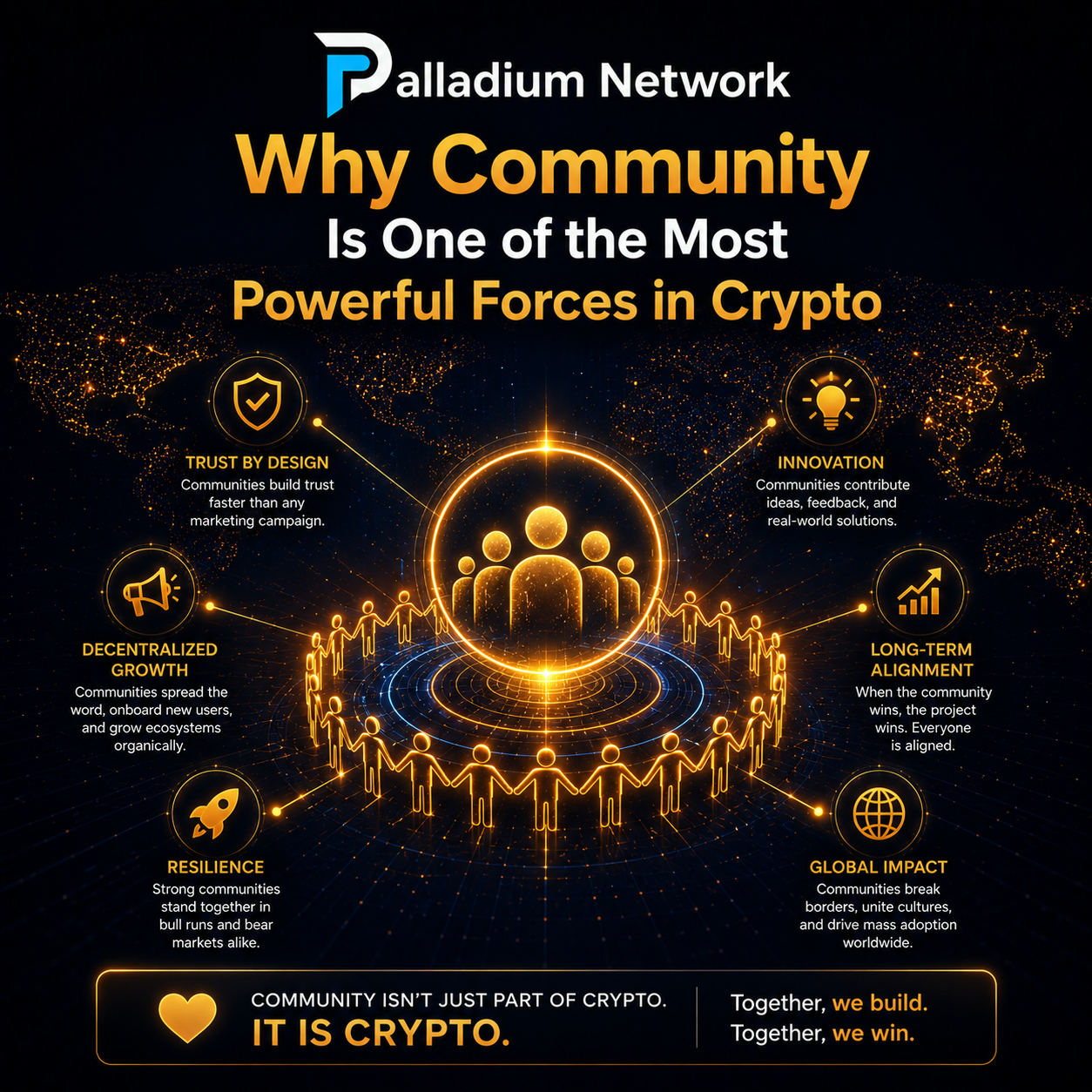
A strong community can help a project survive difficult market conditions and continue growing over time.
Key advantages include:
1. Organic Growth
Communities naturally spread awareness through social media, discussions, and content creation.
2. Trust and Credibility
An active and engaged user base creates confidence around a project’s long-term potential.
3. Faster Ecosystem Expansion
Communities help onboard new users, promote adoption, and increase network activity.
4. Long-Term Sustainability
Projects supported by loyal communities are often more resilient during market downturns.
Social Media and Crypto Culture
Platforms like X, Discord, Telegram, TikTok, and YouTube have become essential parts of the crypto ecosystem.
Unlike traditional industries, crypto communities operate in real time:
- Sharing updates instantly
- Discussing market trends
- Coordinating launches and events
- Educating newcomers
This fast-moving digital culture is one of the reasons crypto evolves so quickly.
The Shift Toward Community-Driven Ecosystems
Modern blockchain projects are increasingly designed around community participation rather than centralized control.
This includes:
- Reward systems for active users
- NFT-based community access
- Governance tokens
- Exclusive ecosystem benefits
The goal is to transform users from passive participants into active contributors.
NFTs and Digital Identity
NFTs have also become an important tool for community building.
Beyond collectibles, NFTs can represent:
- Membership access
- Community status
- Event participation
- Ecosystem utility
They help create stronger digital identities and deeper engagement within blockchain ecosystems.
Challenges of Community Growth
Building a strong community is not easy.
Projects must maintain:
- Transparency
- Consistent communication
- Long-term development
- Trust during volatile markets
Communities can grow quickly—but they can also disappear quickly if confidence is lost.
The Future of Crypto Communities
As blockchain adoption expands, communities will likely become even more important.
The next generation of crypto projects will not only compete on technology, but also on:
- User engagement
- Ecosystem culture
- Long-term loyalty
- Shared vision
The strongest ecosystems will be the ones capable of building communities that believe in the project beyond short-term market movements.
Conclusion
Crypto is more than technology—it is a movement driven by people.
Communities are what transform blockchain projects from simple tokens into living ecosystems with culture, participation, and long-term momentum.
In the future of Web3, strong communities will not just support projects—they will help define and shape them.
Disclaimer: The information provided in this article is for informational and educational purposes only and should not be considered financial, investment, or trading advice. Cryptocurrency markets are highly volatile and involve significant risk. Readers are encouraged to conduct their own research, verify all facts, and consult with a licensed financial advisor before making any investment or trading decisions.