What Are Tokenized Assets?
Tokenized assets are digital representations of real-world assets stored and managed on a blockchain.
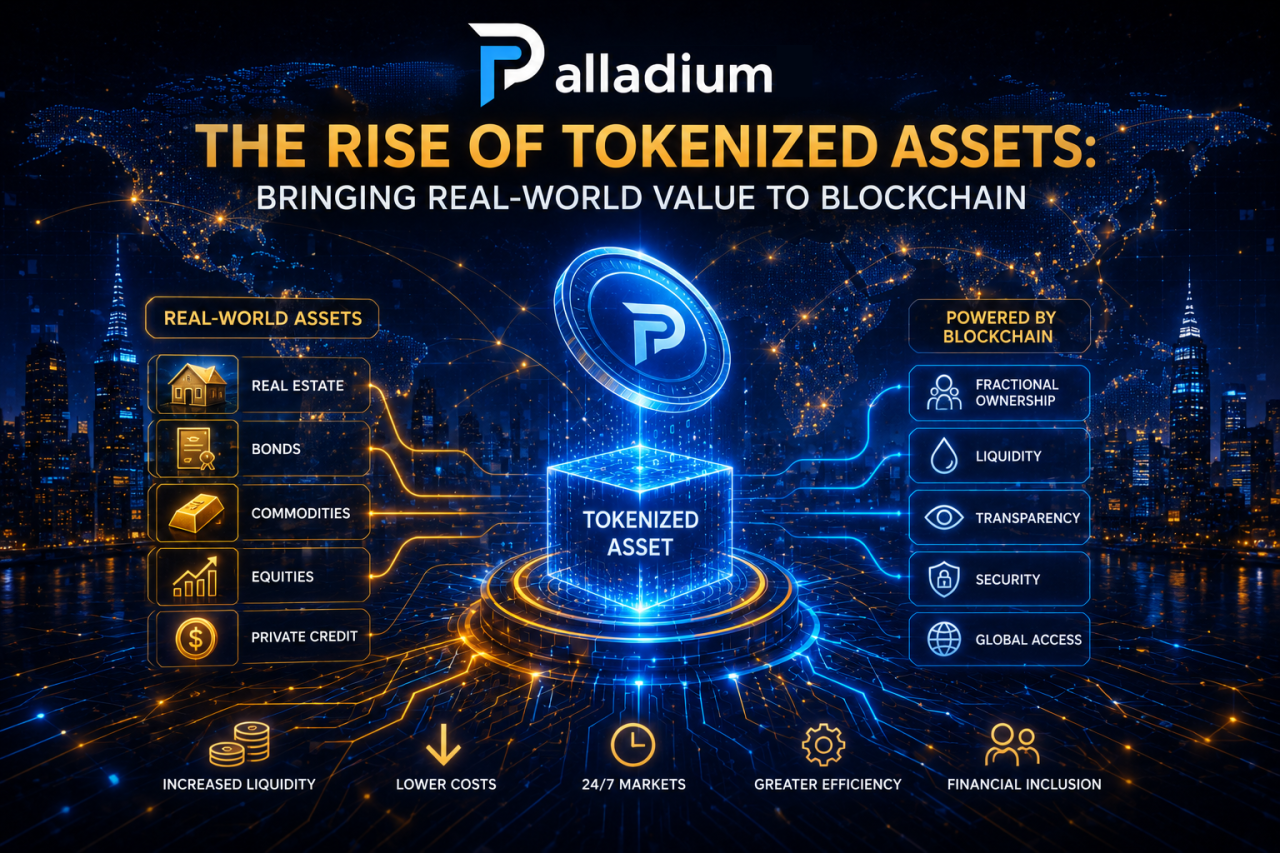
These tokens can represent:
- Real estate properties
- Precious metals
- Company shares
- Art and collectibles
- Bonds and financial instruments
Through blockchain technology, ownership becomes programmable, transferable, and globally accessible.
Why Tokenization Matters
Traditional investment markets often involve barriers such as:
- High capital requirements
- Limited accessibility
- Slow settlement times
- Geographic restrictions
Tokenization helps remove many of these obstacles.
By dividing assets into digital shares, blockchain enables fractional ownership, allowing more people to participate in markets that were previously difficult to access.
A More Accessible Financial System
One of the biggest advantages of tokenized assets is accessibility.
Instead of needing large amounts of capital to invest in physical assets, users can purchase smaller portions represented by blockchain-based tokens.
This opens opportunities for:
- Retail investors
- Global participants
- Emerging markets
- Smaller portfolios seeking diversification
Tokenization creates a more inclusive financial environment.
Improved Liquidity
Many traditional assets—especially real estate and private investments—are considered illiquid.
Selling these assets can take weeks or even months.
Blockchain technology changes this by enabling assets to be traded digitally, potentially improving liquidity and reducing transaction friction.
As tokenized markets expand, the buying and selling process could become significantly more efficient.
Transparency and Security
Blockchain also introduces greater transparency into asset ownership.
Every transaction is recorded on-chain, allowing for:
- Public verification
- Immutable ownership records
- Easier auditing
- Reduced risk of manipulation
Smart contracts can further automate transactions, distributions, and compliance processes.
Institutional Interest Is Growing
Major financial institutions are increasingly exploring tokenization as part of the future of finance.
Why?
Because tokenized systems can improve:
- Operational efficiency
- Settlement speed
- Global market accessibility
- Asset management processes
Many experts believe tokenization could eventually reshape large parts of traditional finance.
Challenges Still Exist
Despite the momentum, tokenized assets still face challenges:
- Regulatory uncertainty
- Legal ownership frameworks
- Custody and compliance concerns
- Limited infrastructure in some regions
However, ongoing development and growing institutional involvement are helping move the industry forward.
The Role of Blockchain Ecosystems
The success of tokenization depends heavily on scalable and secure blockchain ecosystems.
Projects focused on:
- Smart contract infrastructure
- Asset integration
- Secure digital ownership
- User accessibility
will likely play a major role in this transition.
The combination of blockchain technology and real-world assets is expected to become one of the defining trends of the next decade.
The Future of Ownership
Tokenization represents more than technological innovation—it represents a shift in how people interact with value itself.
In the future, ownership may become:
- More digital
- More global
- More accessible
- More efficient
Blockchain technology is laying the foundation for this transformation.
Conclusion
The rise of tokenized assets is helping bridge the gap between traditional finance and the blockchain economy.
By bringing real-world value onto decentralized networks, tokenization has the potential to unlock new opportunities for investors, businesses, and global markets alike.
As adoption continues to grow, tokenized assets could become one of the most important pillars of the future financial system.
Disclaimer: The information provided in this article is for informational and educational purposes only and should not be considered financial, investment, or trading advice. Cryptocurrency markets are highly volatile and involve significant risk. Readers are encouraged to conduct their own research, verify all facts, and consult with a licensed financial advisor before making any investment or trading decisions.