A Functional Internal Swap
At the core of daily ecosystem activity sits the Palladium Swap — a live, operational trading interface that allows users to exchange supported assets seamlessly.
The Swap is not presented as a conceptual roadmap feature. It is active infrastructure that:
- Facilitates internal liquidity flow
- Reduces reliance on external platforms
- Encourages direct ecosystem participation
- Supports token accessibility
By hosting its own trading mechanism, Palladium reinforces structural independence and strengthens the foundation of its internal market dynamics.
Arbitrage Integration: Capital Efficiency in Action
Beyond basic trading functionality, Palladium incorporates arbitrage strategies designed to capitalize on price differentials across markets.
Arbitrage, when executed systematically, can:
- Enhance liquidity efficiency
- Capture market inefficiencies
- Generate structured ecosystem revenue
- Support broader treasury strategies
This adds a layer of active capital deployment to the ecosystem rather than passive token circulation.
Real Estate NFTs: Bridging Digital and Tangible Assets
One of Palladium’s distinguishing components is its integration of real estate-backed NFTs.
By tokenizing exposure to real-world assets, Palladium moves beyond purely speculative digital instruments and explores tangible value representation within blockchain structures.
Real estate NFTs introduce:
- Asset-backed positioning
- Diversification beyond pure token economics
- Long-term value alignment mechanisms
- A bridge between traditional and decentralized finance
This hybrid approach strengthens ecosystem credibility and expands strategic direction.
Staking Mechanisms: Incentivizing Long-Term Participation
Staking remains a core feature within the Palladium ecosystem, rewarding participants who commit to longer-term alignment.
Staking serves several structural purposes:
- Encourages reduced short-term volatility
- Aligns holders with ecosystem growth
- Provides yield-based participation
- Reinforces token retention dynamics
Rather than short-term speculation, staking promotes sustained engagement.
Treasury Strategy: Active Supply Management
Palladium’s treasury operations reflect deliberate supply discipline.
With cumulative market buybacks, structured treasury reserves, and significant token burns exceeding 47 million PLLD removed from circulation, supply management is treated as an active strategy rather than a passive outcome.
Treasury mechanisms contribute to:
- Long-term ecosystem sustainability
- Strategic flexibility
- Controlled supply evolution
- Enhanced financial positioning
Transparent, on-chain verifiable operations further reinforce accountability.
An Integrated Ecosystem, Not Isolated Features
What differentiates Palladium is not a single product — it is the interaction between its components:
- Swap activity supports liquidity.
- Arbitrage enhances capital efficiency.
- Staking strengthens holder alignment.
- Real estate NFTs expand asset exposure.
- Treasury management reinforces structural stability.
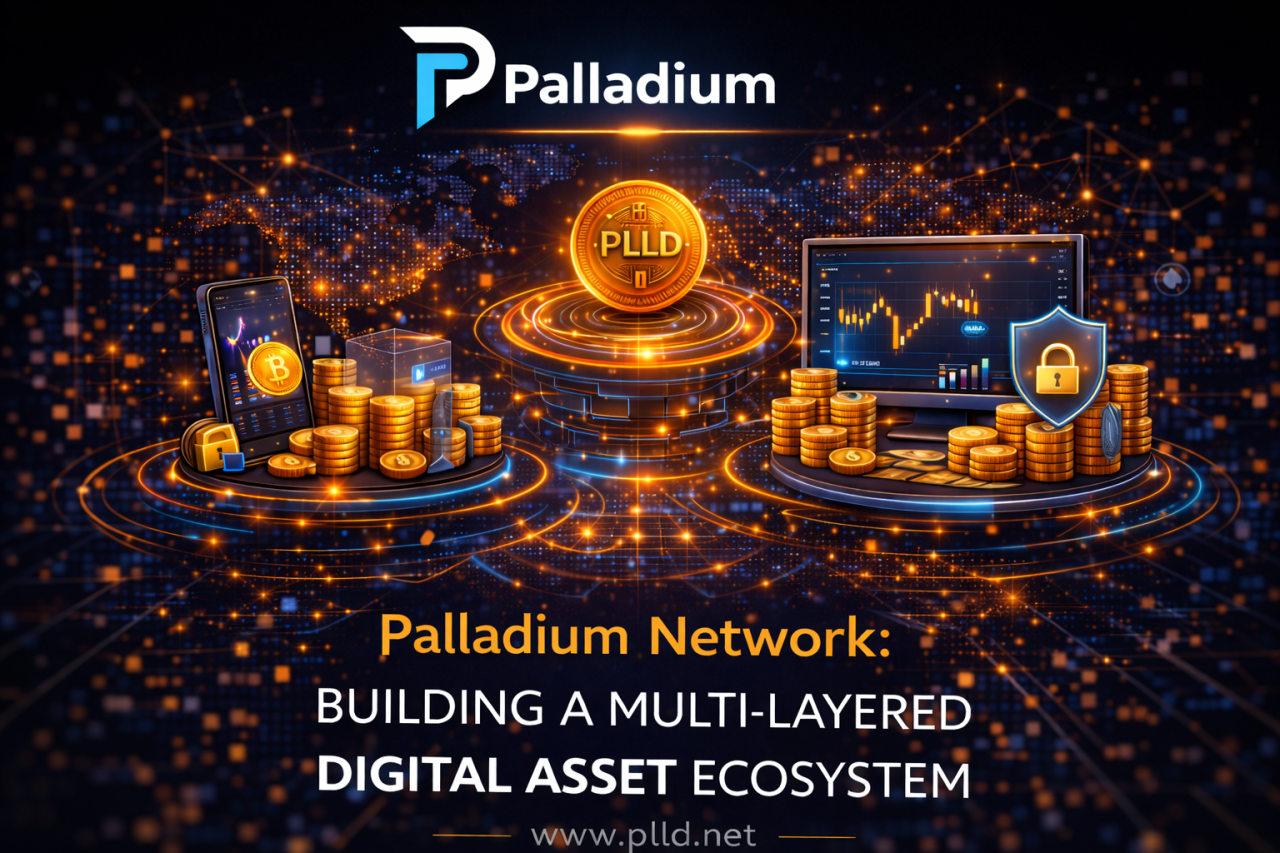
Each feature feeds into the others, creating a multi-layered digital financial environment.
Infrastructure First, Expansion Second
In a sector often driven by narrative cycles, Palladium emphasizes operational structure. By building and maintaining active tools — rather than relying solely on listings or speculation — it aims to develop a sustainable digital asset ecosystem around $PLLD.
As development continues, Palladium’s model reflects a broader philosophy:
Utility, structure, and disciplined execution form the foundation for long-term growth.