What Is DeFi?
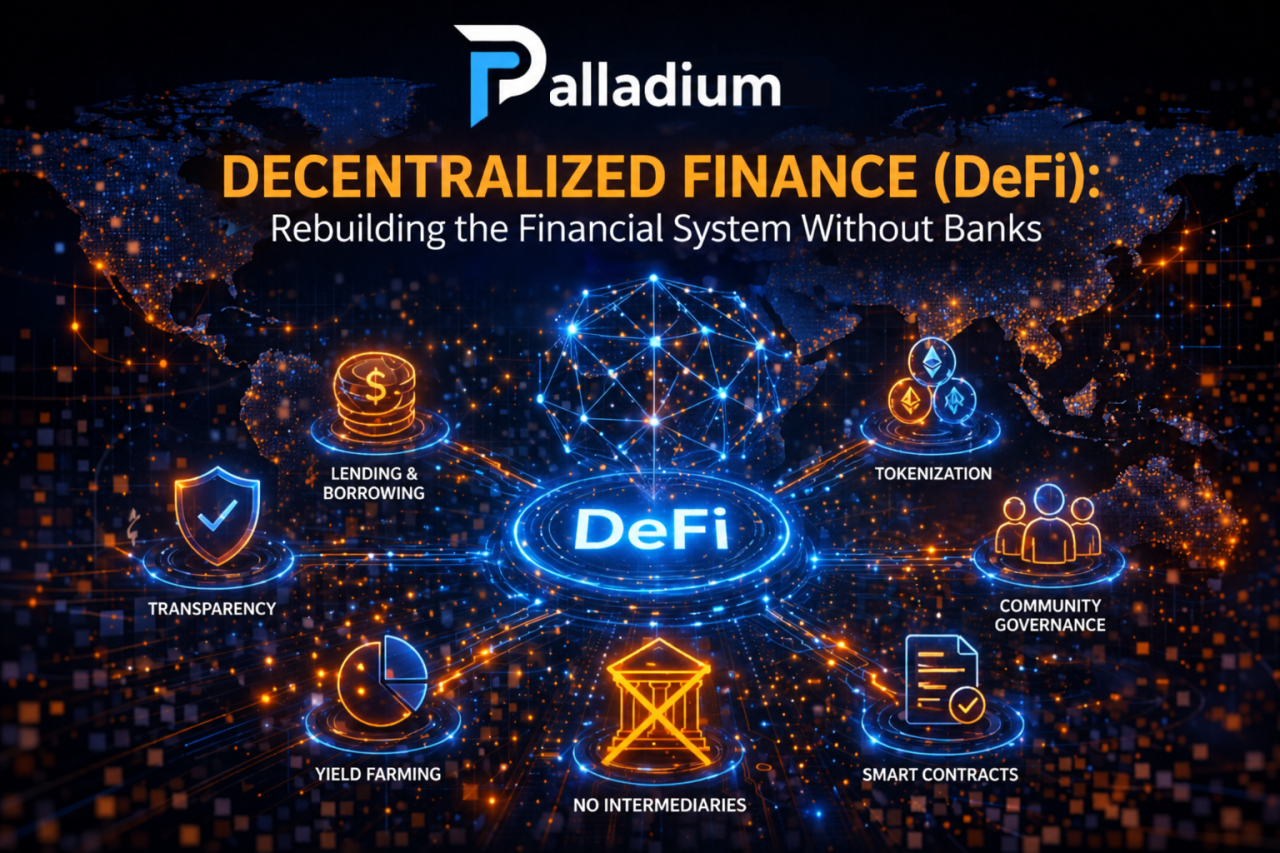
Decentralized Finance refers to a system of financial applications built on blockchain networks that operate without central authorities like banks or brokers.
Instead of relying on institutions, DeFi platforms use:
- Smart contracts (self-executing code)
- Blockchain transparency
- Permissionless access
This allows anyone with an internet connection to access financial services—without needing approval or intermediaries.
Core Use Cases of DeFi
DeFi is not a single product—it’s an entire ecosystem. Some of its most important use cases include:
1. Lending and Borrowing
Users can lend their crypto assets to earn interest or borrow against them without going through traditional credit checks.
2. Decentralized Exchanges (DEXs)
Platforms allow users to trade assets directly from their wallets, removing the need for centralized exchanges.
3. Yield Farming and Staking
Investors can earn rewards by providing liquidity or locking assets into protocols.
4. Stablecoin Infrastructure
DeFi heavily relies on stablecoins to provide liquidity and reduce volatility within the ecosystem.
Why DeFi Is Disruptive
DeFi introduces several advantages over traditional finance:
- Accessibility: Open to anyone globally
- Transparency: All transactions are recorded on-chain
- Efficiency: Faster settlements and lower fees
- Control: Users maintain custody of their assets
These benefits are especially powerful in regions where traditional banking infrastructure is limited or inefficient.
The Risks Behind the Innovation
While DeFi offers significant opportunities, it also comes with risks that users must understand:
- Smart contract vulnerabilities
- Liquidity risks and market volatility
- Lack of regulatory protection
- User error (irreversible transactions)
Unlike traditional finance, there is often no safety net—making education and due diligence essential.
Institutional Interest Is Growing
Institutions are increasingly exploring DeFi as a way to enhance yield and efficiency. While full-scale adoption is still developing, the integration of DeFi principles into traditional finance is already underway.
This hybrid model—sometimes referred to as “CeDeFi” (Centralized + Decentralized Finance)—could become a major trend in the coming years.
The Future of DeFi
The next phase of DeFi growth will likely focus on:
- Improved user experience (UX)
- Better security and auditing standards
- Scalability through Layer 2 solutions
- Regulatory clarity
As these challenges are addressed, DeFi could become a core pillar of the global financial system.
Conclusion
Decentralized Finance is more than just a trend—it represents a fundamental shift in how financial systems operate.
By removing intermediaries and empowering users, DeFi is creating a more open, transparent, and inclusive financial ecosystem.
As adoption continues to grow, the question is no longer whether DeFi will play a role in the future of finance—but how large that role will be.
Disclaimer: The information provided in this article is for informational and educational purposes only and should not be considered financial, investment, or trading advice. Cryptocurrency markets are highly volatile and involve significant risk. Readers are encouraged to conduct their own research, verify all facts, and consult with a licensed financial advisor before making any investment or trading decisions.